From wireframe to website in one night
How this lab was built: from six ideas on a canvas to a working site in two languages. What AI did, and what it didn't.
- Claude
- Next.js
- Vercel
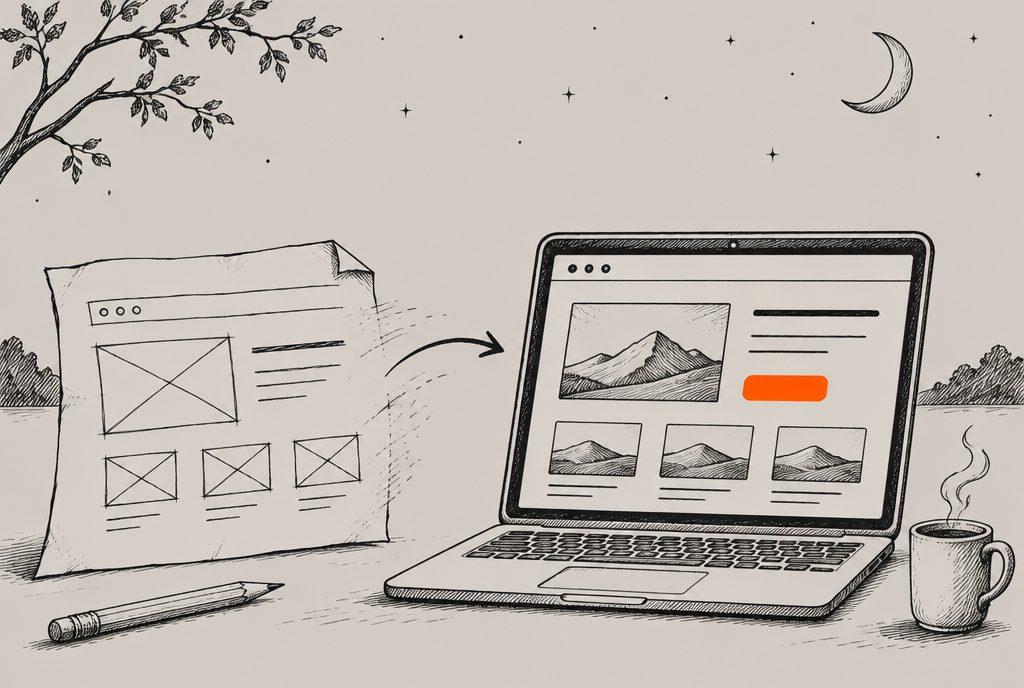
This site was built in one night. Not because it had to be, but because we wanted to see how far you get when every step is prepared well.
Look first, then build
We didn't start with code. We started with six ideas on a canvas: a living image at the top, a card for every project, an EU AI Act check and a form that feels like a notepad. Only once those choices were fixed did a clickable sketch for phone and desktop follow.
What AI did
- Images. The raven and the badger were made with AI.
- Code. Most of the code was written with Claude Code. Every step was then checked: does it work on a phone, does any text drop out, does every button do what it promises?
- Screenshots. The images of our tools are real screenshots with made-up data. No AI involved.
What AI didn't do
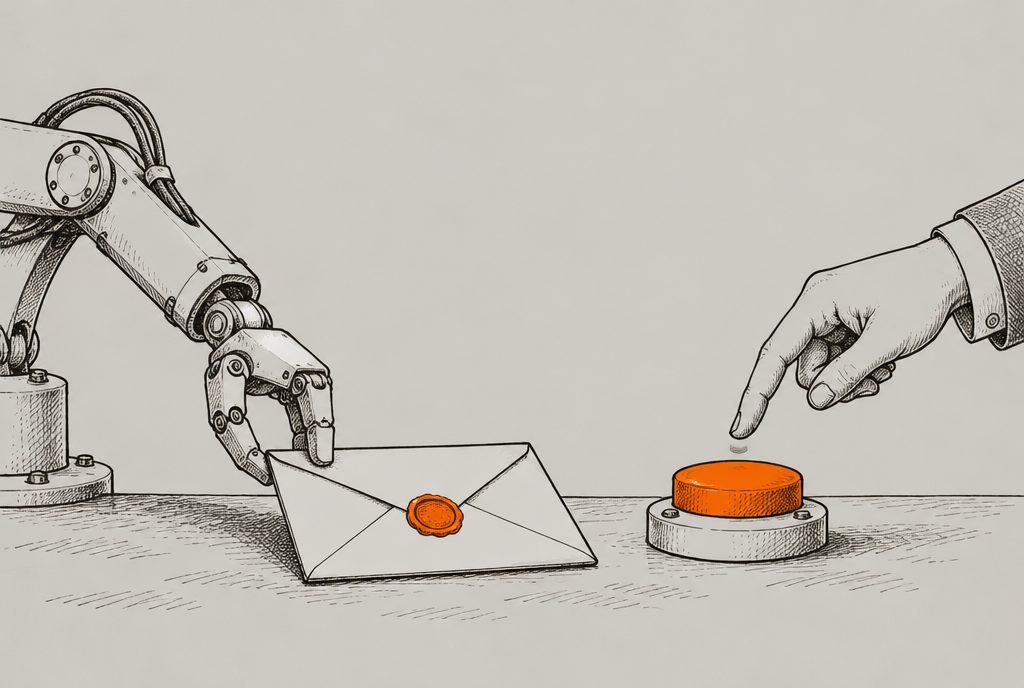
The choices. Which projects you see here, which line sits at the top, that no customer names appear anywhere and that every number has a source: those are human decisions. AI makes what you already know faster. It doesn't know what you want.
What's in it for you
- Automation
- Lessons learned
- Building
- GitHub Actions
- GitHub
- Mistral
- Vercel
- Automation
- How we work
- EU AI rules
- Claude
- Gmail
- GitHub