Small care providers: less time on admin, more on clients
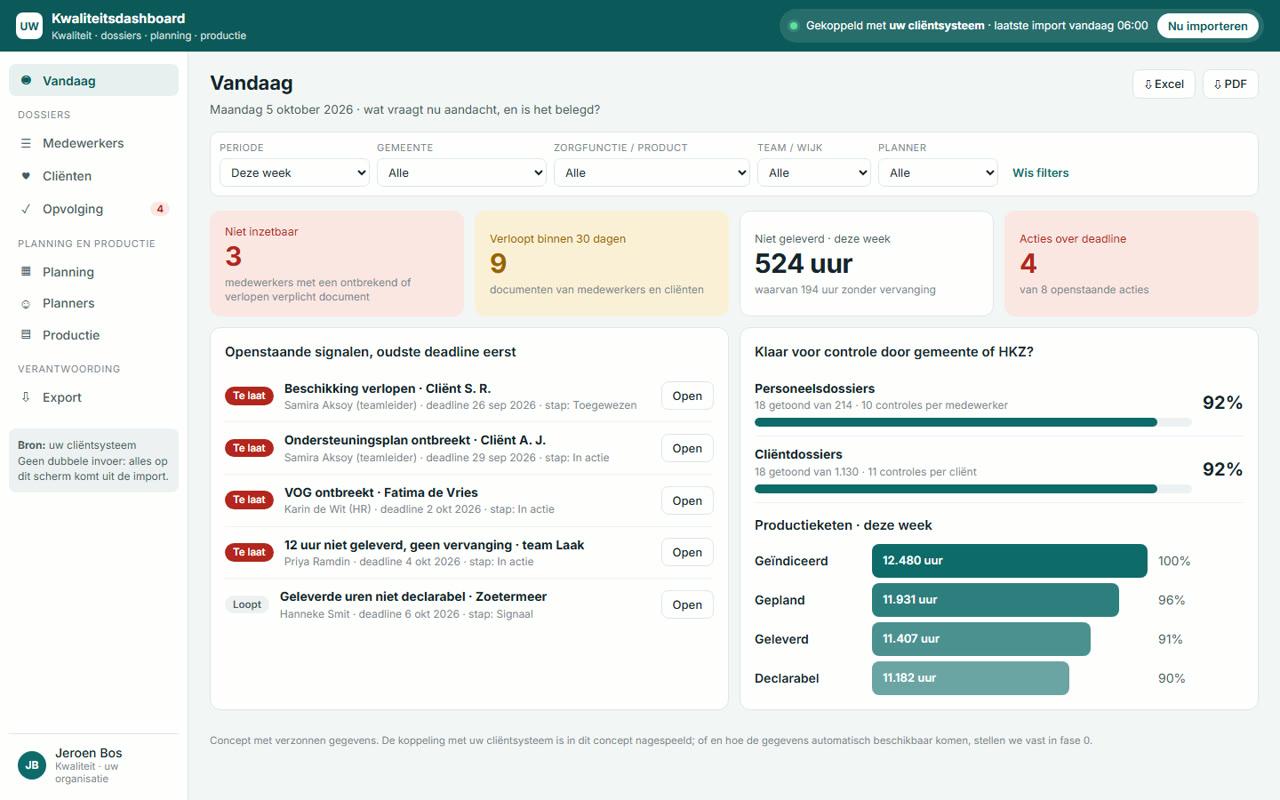
For Dutch home care, disability care, mental health practices and neighbourhood teams. This is about admin, quality and reporting, not care itself. What is happening, what works well, and tools that make the paperwork lighter.
What is happening
- The target is at most 20% meaningful admin by 2030. This was agreed in the Dutch supplementary care and welfare agreement (AZWA). The site (Ont)Regel de Zorg offers examples and tools to cut registrations. (Dutch government)
- Annual accountability remains a bottleneck. Reports over 2025 were due on 31 May 2026. By that date 11,600 institutions had filed; by the end of September over 17,000. Thousands of organisations were late. (Accountant.nl, October 2026)
- The Dutch Cybersecurity Act (NIS2) has applied since 15 August 2026. Healthcare falls under it; organisations must check themselves whether they are in scope. Those in scope register, take appropriate measures and report major incidents. The board is responsible. (Dutch government, 15 August 2026)
- Voice-based reporting is breaking through in home care. At home care organisation STMG, staff dictate reports and a language model turns them into readable text. About 60% of staff use it actively. (RVO case study)
- The staff shortage is growing. According to the December 2025 forecast, the shortage in Dutch care and welfare will be almost 301,000 workers in 2035. If the care agreements succeed, including less admin, it drops to about 227,000. (Dutch government, 19 December 2025)
What works well
- Cut first, automate second. Once a year, go through every registration: who uses it, and for what? What nobody uses goes. Only then look at what to automate.
- Dictate instead of typing; the professional signs off. Let AI prepare the report. The care professional always checks and corrects it before it goes into the file.
- Make annual accountability a fixed rhythm. Collect data in one overview all year and put 31 May early in the plan. Have figures and draft text prepared; the controller or accountant reviews them.
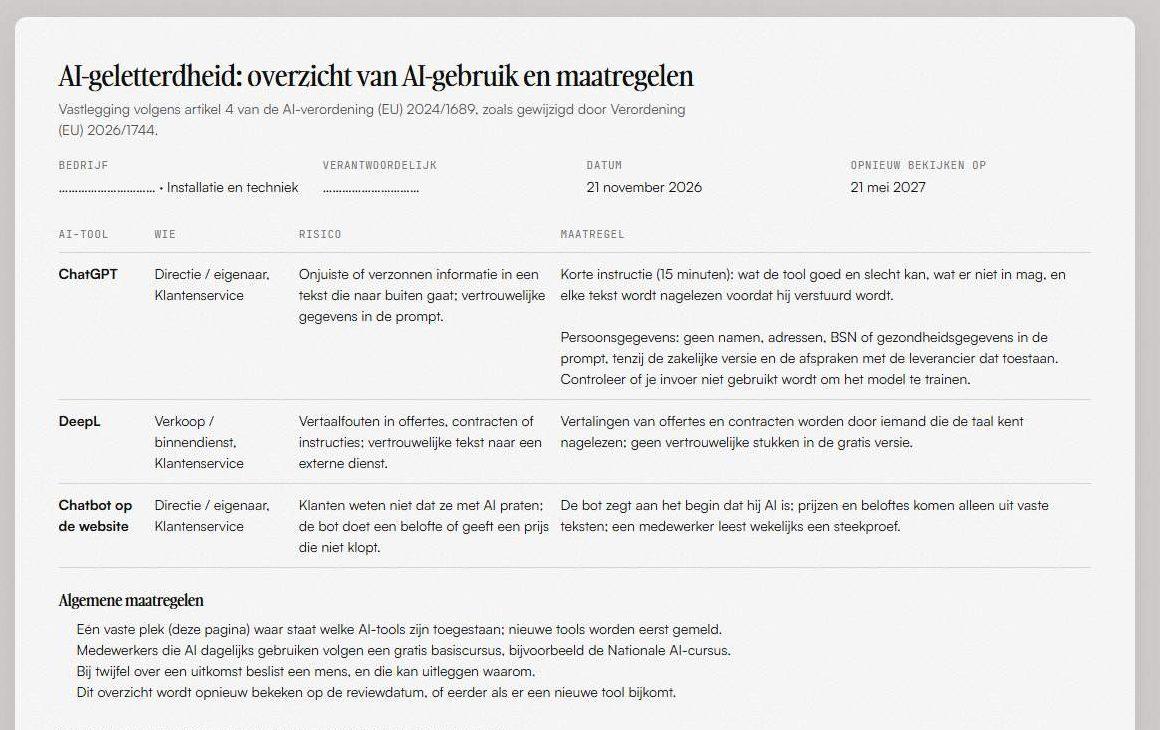
- Treat health data as special category data. Do a DPIA before using an AI tool. Choose suppliers with storage and processing in the EU, sign a processing agreement and put nothing into free chatbots.
- Get the cyber basics in place, even if you are just outside the law. Two-factor authentication, backups, an incident procedure and a short training for board and staff. That fits the Cybersecurity Act and NEN 7510.
Recent news
- ‘Spraakgestuurd rapporteren vraagt ook om ethische afwegingen’ICT&health · 30 Oct
- Revalidatiecentra starten pilot met spraakgestuurd rapporterenICT&health · 4 Nov
- Amsterdamse huisartsen testen slimmere chronische zorgICT&health · 29 Oct
- De patiënt is de ‘why’ van AI in de zorgICT&health · 2 Nov
- CEG: ethiek nog onderbelicht bij gebruik AI in de zorgICT&health · 4 Nov
Collected automatically from Google News, refreshed every few hours. We chose the search, not the articles.