What if China wins the AI race? The quiet fight between free and paid AI
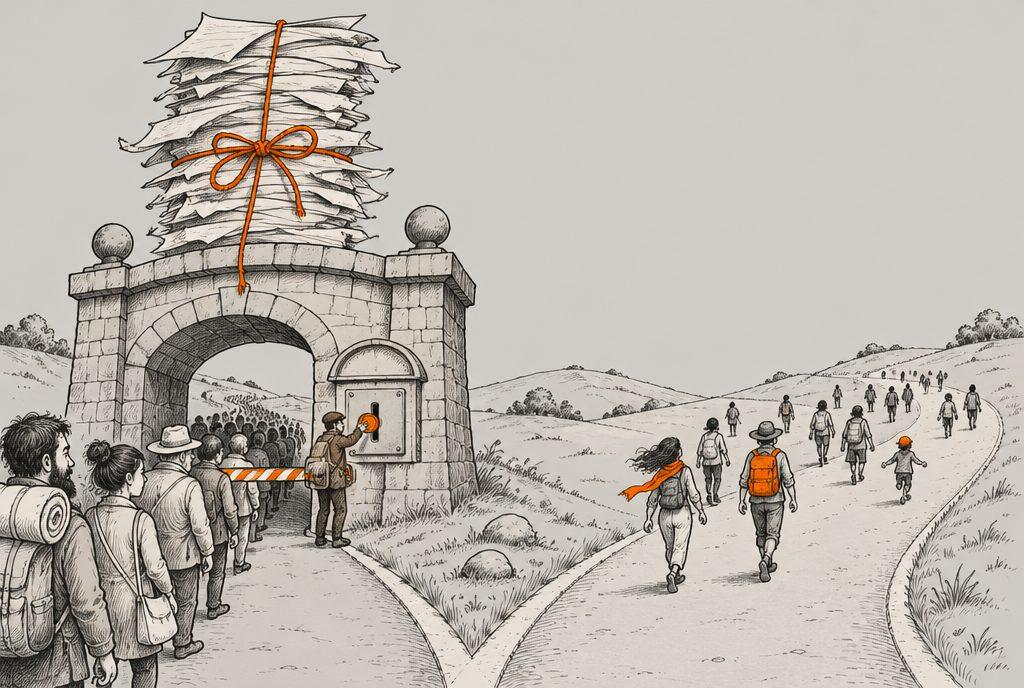
Behind the Nvidia news sits a bigger fight: will AI be an expensive subscription or a free tool? It's about business models, debt and electricity. And about what you pay.
- Claude
- NVIDIA
- Mistral
On 8 November 2026, Nvidia's board opened an independent investigation into its CEO, Jensen Huang. It followed reports that he had been the target of a foreign intelligence effort. Four days later he resigned. The board said it had no reason to believe company secrets or national security had been compromised.
The coverage was mostly about espionage. But underneath sits a bigger question, and it affects your business too: will AI be an expensive subscription, or a free tool anyone can run themselves?
Two ways to make money from AI
- The model runs at the maker, you rent access
- Pay per month or per use
- The maker sets price and rules
- Examples: OpenAI, Anthropic, Google
- The model can be downloaded (open weights)
- Run it on your own server or in the cloud
- No licence fee per use, but your own compute
- Examples: Meta, Mistral, Nvidia, Chinese labs
How a company makes money decides which side it's on. A maker of closed models lives on subscriptions, so a free alternative of nearly the same quality is a direct threat. Nvidia makes its money on chips. The more people run models themselves, the more chips they need. That's why Nvidia plans to spend about $26 billion over five years on open models of its own.
China's move: make it free
US export rules give Chinese companies less access to the best chips. Instead of competing on subscriptions, they give strong models away. In July 2026, Moonshot AI released Kimi K3: an open model with 2.8 trillion parameters, the largest open model so far. Moonshot says it comes close to the best paid models. Those are the company's own numbers.
Two caveats that often go missing:
- Free isn't always free to use. Kimi K3's licence asks companies with more than $20 million in revenue to sign a contract with Moonshot before offering the model as a service.
- There's an accusation of copying. US Treasury Secretary Scott Bessent threatened sanctions if Chinese models were trained at scale on the answers of American models. In his words: "Open source is not open season on American IP." China denies it and accuses US companies of doing the same.
The letter of 24 July
Washington weighed a ban on Chinese open models. On 24 July 2026, more than twenty companies, including Nvidia, Microsoft, Meta, Hugging Face and France's Mistral, sent an open letter with one message: don't broadly restrict open models. OpenAI, Anthropic and Google did not sign. No general ban has followed so far.
The bill: AI is built with borrowed money
Data centres, chips and power cost hundreds of billions. More and more of it is borrowed. Part of those loans is packaged into securities and sold on to investors such as pension funds.
in securities backed by data centres was issued in the first eight months of this year, up from $24.1 billion a year earlier.
That's growth of about 60 percent in a year. The idea behind all these loans: AI will bring in so much subscription money that the debt is easy to repay. Free open models put exactly that idea under pressure.
Some macro analysts draw a hard conclusion from this. Their reasoning, in short:
Whether it plays out like that, nobody knows. But it shows that the choice between free and paid isn't only about software.
The real limit: electricity
Whatever happens to the debt, data centres need power. US electricity generation stayed roughly flat from the mid-2000s to the early 2020s. Only in 2025 did it set a new record. More compute first needs more power plants, cables and raw materials such as copper.
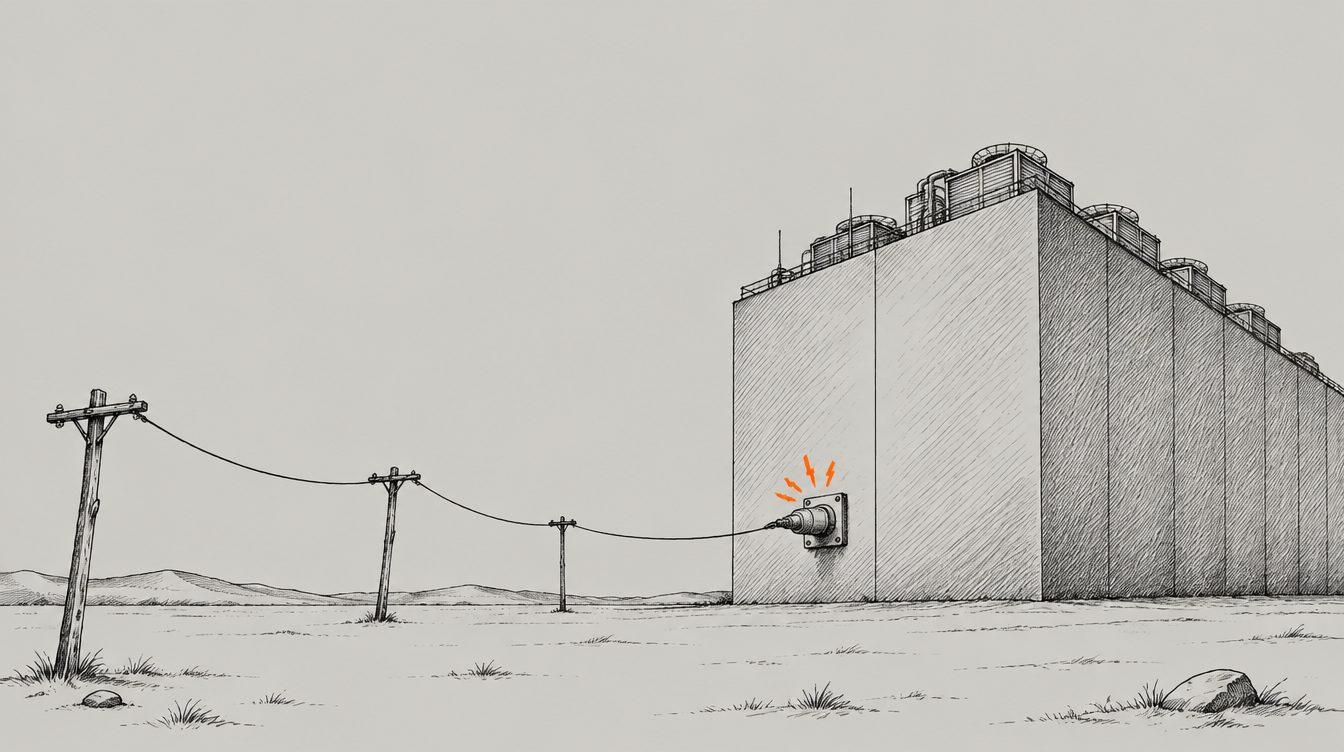
That's why some investors look at things you can't print or download: energy, the grid, metals, gold and bitcoin. That's their conclusion, not advice from us.
What does this mean for your business?
Away from the big politics, for a business owner this is mostly good news. More and more strong models can be used for free or run yourself. Three things to take away:
- Don't depend on one provider. Build your processes so you can switch models. Today's best may not be the best in six months.
- Check where your data goes. You can run an open model on a European server, so customer data never leaves Europe. Mistral is a European provider that releases open models itself.
- Read the licence. Free to download doesn't always mean free to use. Especially not if you build the model into a product for customers.
This piece was written with the help of AI and checked by a human before it went online. It is not investment advice.
- Agents
- Automation
- Claude
- Finding demand
- Agents
- Automation
- Claude
- Google News
- Gmail
- Officiële Bekendmakingen